Find the need.
We look for problems where software can create real leverage: painful workflows, underserved use cases, and moments where a new model capability changes what is possible.

Human taste. Agent execution.
Kerva is building toward autonomous product creation: a system that can find problems worth solving, shape the right solution, build software, take it to market, and improve from real use.
Product creation has usually depended on founder instinct, small-team coordination, craft, luck, and manual operating work. Kerva's thesis is that much of this can be made explicit: the expert context, decisions, constraints, tests, feedback, and taste loops that turn a need into a product.
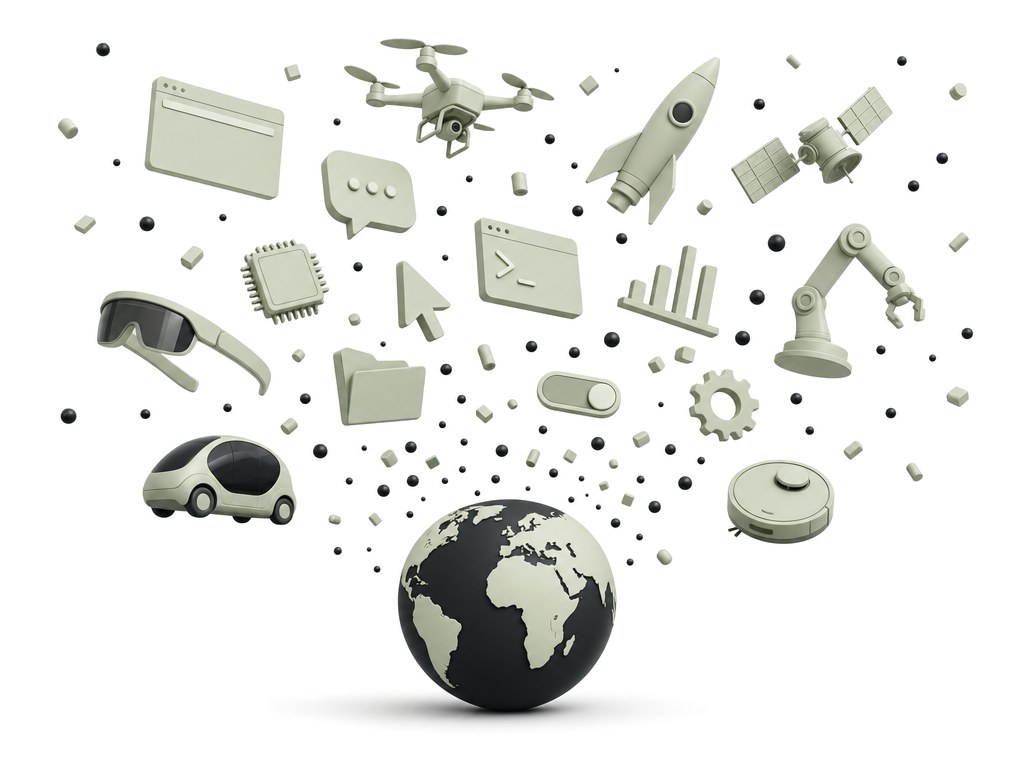
Frontier labs see automated research as the inflection point for compounding model progress. Kerva sees automated product creation as the same kind of inflection point for software.
Frontier models are improving at extraordinary speed, and the labs will keep making intelligence cheaper. The open question is practical: who turns general capability into real products, in real markets, used by real people. That layer does not arrive on its own. It has to be built, and that is what Kerva is building.
Kerva learns by shipping. Each product is built for real use, then used to identify what can be captured, evaluated, repeated, and handed to agents.
The next generation of products will not only serve people. They will be operated by AI systems, exposed to agents, and embedded inside workflows where agents coordinate with other agents.
We look for problems where software can create real leverage: painful workflows, underserved use cases, and moments where a new model capability changes what is possible.
Humans set taste, constraints, positioning, and the standard for what is worth making. Agents expand the surface area we can inspect, produce, test, and refine.
When a part of the work repeats, we move it into agents, tools, evaluations, workflows, and shared context so the next product starts with more of the system already in place.
Each product has to solve a real problem, serve actual users or workflows, and show whether it can become something much larger.
AI Pop, one-tap photo enhancement, is live but mostly used internally. Building it taught us how frontier models behave inside a real product, and Vargus came directly out of that work.
Commit--IRLCommit--IRL puts an exercise heatmap on your GitHub profile, right next to your contributions. A side project, live and built for the fun of it.
Kerva follows a pattern from our earlier companies: enter a new technological surface early, build real products inside it, and follow the signal until the deeper opportunity becomes clear.
The team behind Kerva previously built AddLive, a developer platform for real-time voice and video. AddLive began as product experiments around live video on the web, then became the infrastructure those products needed. Snap acquired it in 2014, and it went on to power video calling inside Snapchat for millions of users.
Kerva applies the same pattern to AI: products first, infrastructure underneath.
If you have strong taste, technical range, and want to help build this, say hello.
Say hello